
The Role of Integrated Automation Systems in Modern Automotive Manufacturing
Connecting Robotics, Controls, and Smart Manufacturing into One Seamless Solution
As automotive manufacturing continues to evolve, OEM and Tier 1 production environments demand automation systems engineered for precision, repeatability, and long-term production stability. From robotic assembly automation to advanced hemming and controls integration, modern manufacturing systems must support increasingly complex vehicle programs while maintaining consistent production performance.
Today’s automation environments rely on coordinated engineering across robotic systems, tooling, controls integration, and fixture design to ensure reliable operation throughout the production lifecycle.
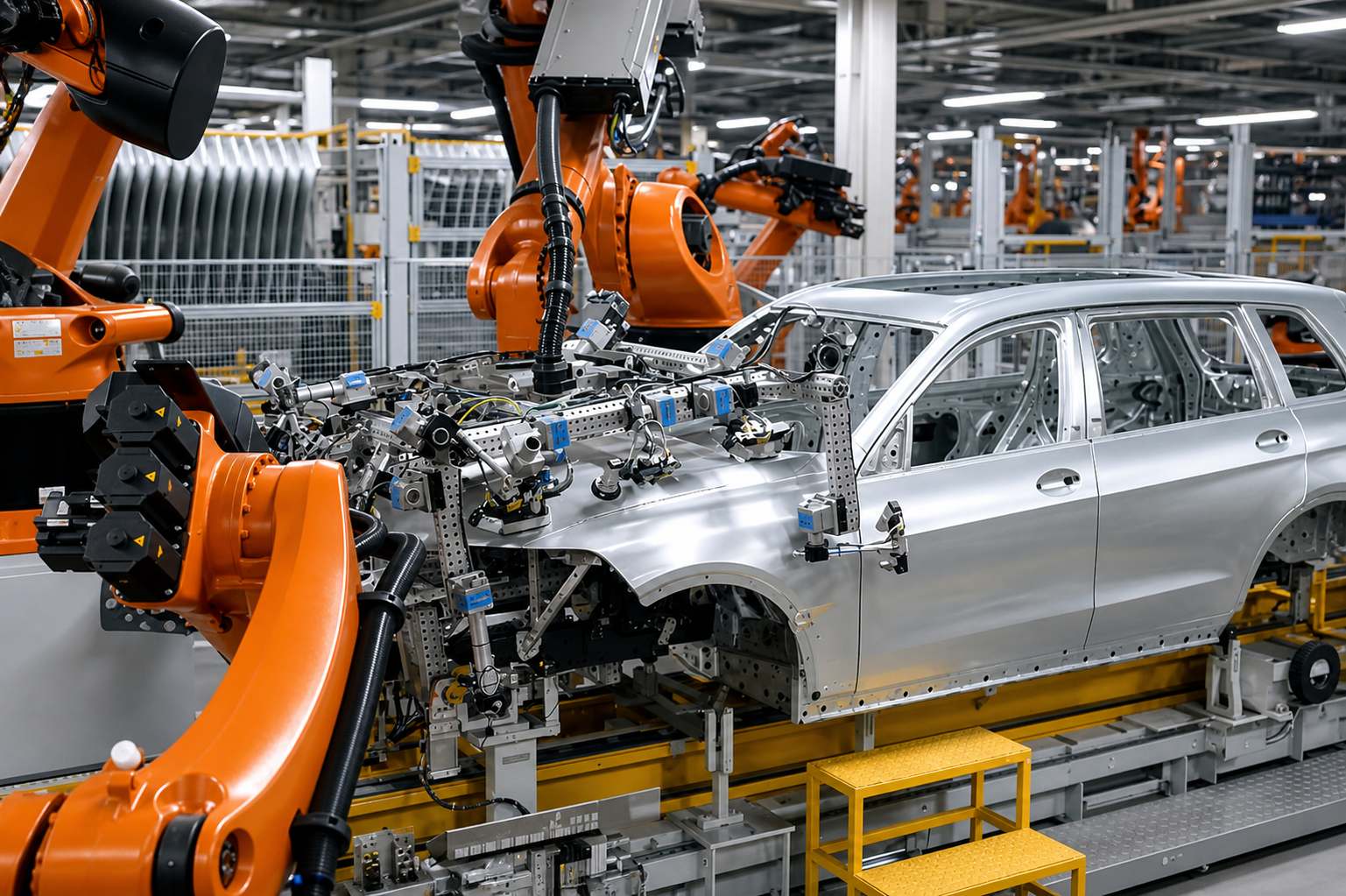
Precision Automation for High-Volume Manufacturing
Modern automotive assembly systems are engineered to support tight tolerances, repeatable positioning, and synchronized robotic motion across multiple production processes. Integrated automation cells help manufacturers maintain consistent quality while improving throughput and reducing manual variability.
Advanced robotic automation systems commonly support:
Robotic closure assembly processes
Material handling and transfer systems
Fixture positioning and part retention
Integrated production sequencing
These systems must remain flexible enough to support changing vehicle architectures, EV manufacturing requirements, and mixed-material production environments.
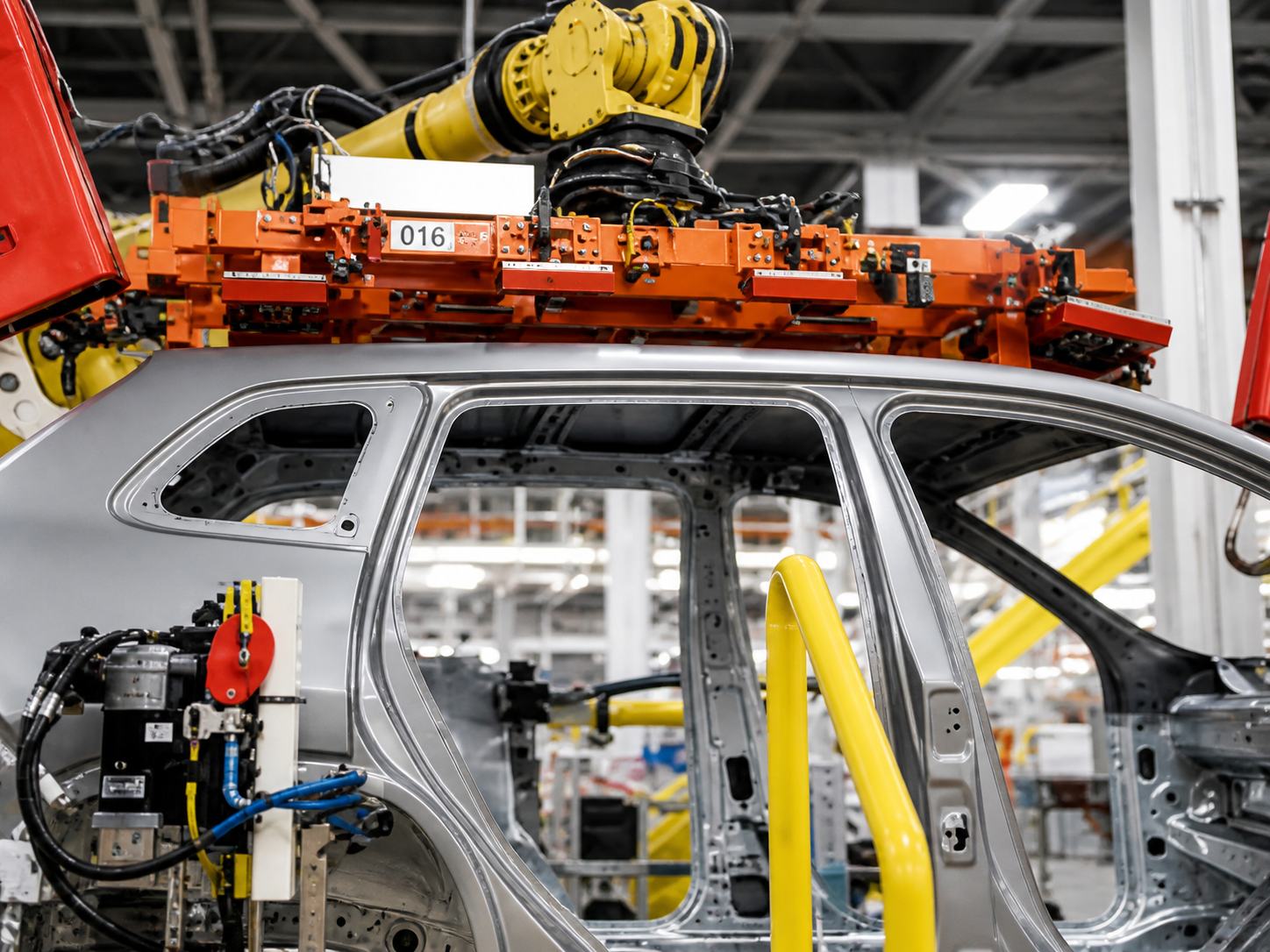
Automation Engineering Beyond Robotics
Successful manufacturing automation extends beyond robotic hardware alone. Integrated engineering approaches combine mechanical design, tooling development, controls integration, and process validation into a coordinated production system.
Rotary automation cells and integrated fixture systems are often used to support repeatable multi-stage production processes while optimizing floor space and cycle time performance.
Key engineering considerations include:
Robotic path development
Fixture repeatability and durability
Production safety systems
Launch commissioning and validation
Integrated automation systems help manufacturers maintain stable production performance while supporting global launch programs and long-term manufacturing reliability.
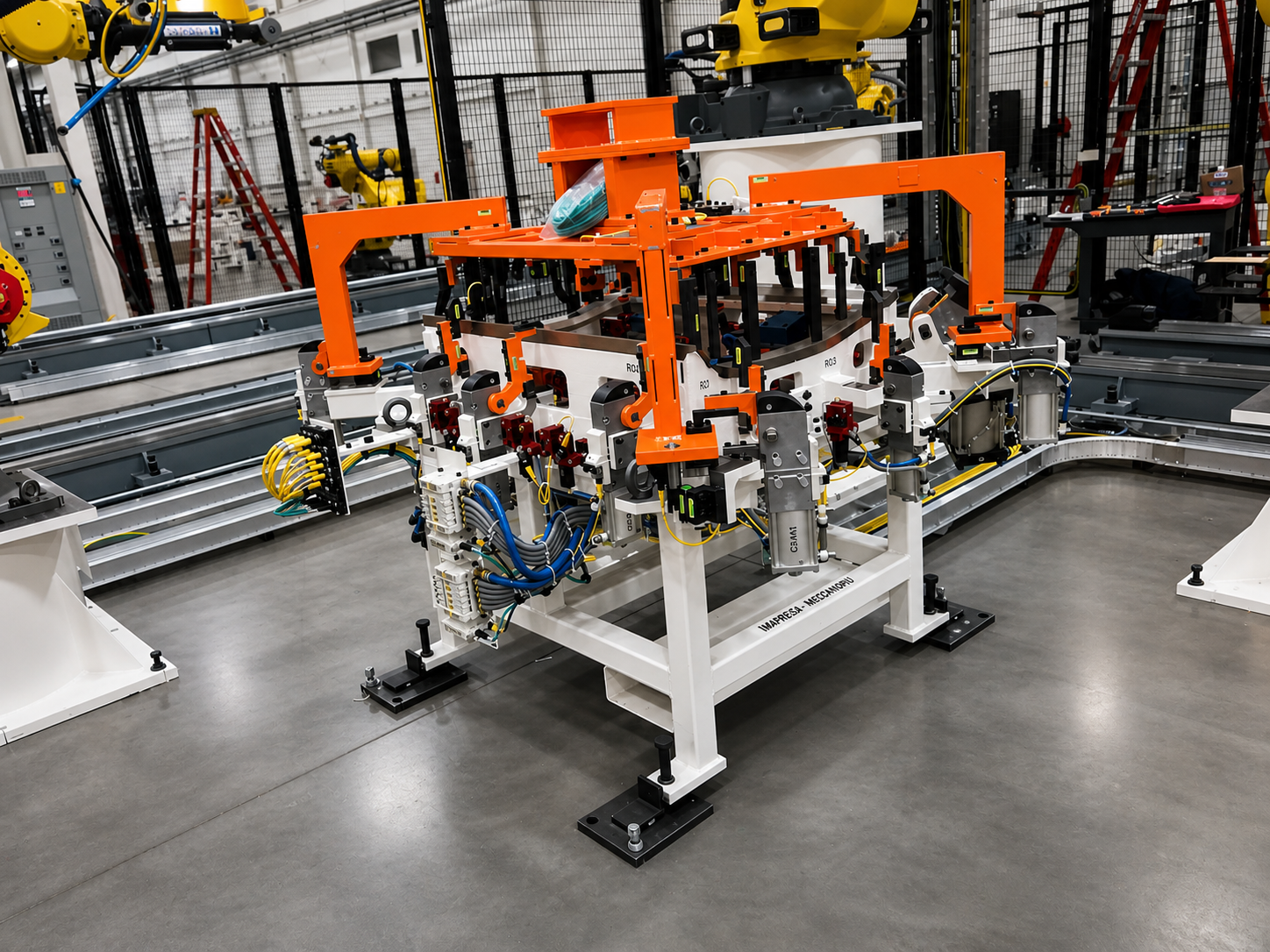
Supporting Modern Closure Manufacturing
Automotive closure production requires controlled handling, precise alignment, and repeatable flange formation to maintain Class-A surface quality across steel and aluminum applications.
Modern hemming systems and robotic tooling solutions are engineered to support accurate closure processing while minimizing distortion and maintaining production consistency.
As vehicle platforms continue to evolve, manufacturers increasingly require automation systems capable of supporting:
Lightweight vehicle structures
High-volume mixed-material production
Flexible robotic assembly processes
Integrated automation engineering plays a critical role in ensuring these manufacturing systems remain scalable, repeatable, and production-ready.
Engineering Automation Systems Built for Production
Modern automotive manufacturing demands automation systems engineered for precision, repeatability, and long-term production performance. MBE delivers integrated robotic assembly, hemming, and controls integration solutions designed to support OEM and Tier 1 manufacturing programs worldwide.