
Robotic Roller Hemming vs Traditional Hemming in Automotive Manufacturing
Comparing precision, flexibility, quality, and production efficiency for today's automotive OEMs and Tier 1 manufacturers.
In modern automotive manufacturing, hemming technology plays a critical role in assembling closure panels such as doors, hoods, decklids, and liftgates. The hemming process joins an outer panel to an inner structural panel by folding the edge of sheet metal over the inner component.
Historically, this process relied on large stamping dies and dedicated hemming presses. Today, many automotive OEMs and Tier 1 suppliers are shifting toward robotic roller hemming systems that provide greater flexibility and precision.
Understanding the differences between traditional hemming and robotic roller hemming helps manufacturers select the right process for modern vehicle production.
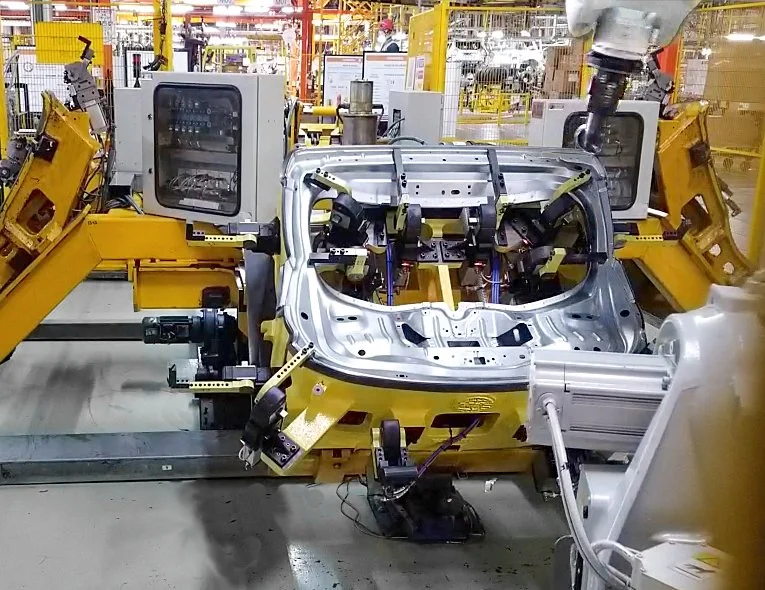
What Is Robotic Roller Hemming?
Robotic roller hemming uses an industrial robot equipped with a roller hemming tool to progressively fold the edge of an outer panel over an inner panel.
Instead of a single stamping operation, the robot moves along the panel edge while the roller head gradually forms the hem in multiple passes.
This approach allows manufacturers to:
precisely control forming forces
adjust robot paths for different panel shapes
produce consistent hemming quality across complex geometries
Because the process is programmable and flexible, robotic roller hemming has become a common solution for modern automotive body assembly lines.
Traditional Hemming Systems
Traditional hemming systems typically rely on dedicated hemming dies integrated into stamping presses or press lines.
In this process, the panel is placed in a die where a series of forming operations bend and fold the outer panel flange around the inner panel.
While this approach has been used successfully for decades in automotive production, it often requires:
large, dedicated tooling
significant capital investment
limited flexibility when panel designs change
For high-volume programs with stable designs, die hemming can be effective. However, evolving vehicle platforms are pushing manufacturers toward more flexible solutions.
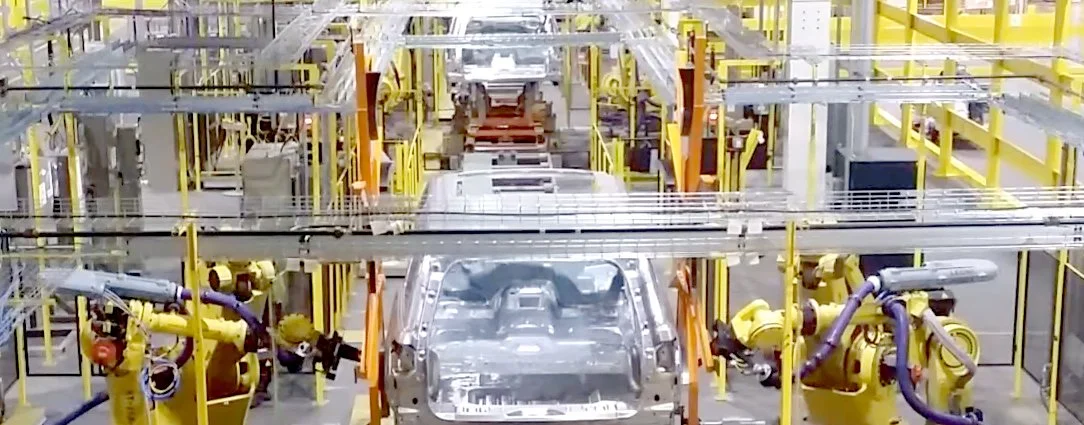
Key Advantages of Robotic Roller Hemming
Robotic roller hemming provides several advantages compared to traditional die hemming.
Flexibility for Multiple Vehicle Programs
Robotic systems can be reprogrammed for different panel geometries, making them ideal for plants producing multiple vehicle models.
Lower Tooling Investment
Roller hemming systems typically require less dedicated tooling compared to large hemming dies.
Improved Process Control
Robotic systems allow engineers to fine-tune paths, forces, and forming sequences, improving consistency and panel quality.
Compatibility with Lightweight Materials
Modern vehicle platforms often use aluminum, mixed-material structures, and complex panel shapes. Robotic hemming can adapt more easily to these materials.
Because of these advantages, robotic roller hemming is widely used in modern automotive body assembly and closure manufacturing lines.
Choosing the Right Hemming Process for Automotive Production
Selecting between robotic roller hemming and traditional die hemming depends on several factors, including:
production volume
vehicle platform strategy
panel complexity
plant flexibility requirements
Many OEM and Tier 1 facilities use robotic roller hemming systems when flexibility and process control are critical, particularly for multi-model production lines and evolving vehicle architectures.
Robotic Hemming Expertise from Modern Body Engineering
Modern Body Engineering designs and supports robotic roller hemming systems for automotive OEM and Tier 1 manufacturers worldwide. Our engineering team works with manufacturing organizations to develop reliable hemming automation that supports high-volume production, consistent panel quality, and long-term operational stability.
From system design and controls integration to commissioning and launch support, MBE provides automation solutions built for modern vehicle manufacturing.
Learn more about our Robotic Roller Hemming Systems designed for high-volume automotive manufacturing.