
Automotive Closure Assembly Automation: Improving Precision, Quality & Efficiency
Advancing Automotive Manufacturing Through Precision Engineering, Integrated Automation & Efficient Production Processes
In today's competitive automotive manufacturing environment, precision, consistency, and production efficiency are essential. As vehicle designs evolve and manufacturers introduce new materials and increasingly complex components, the demand for reliable automotive closure assembly automation continues to grow.
Automotive closures—including doors, hoods, liftgates, and decklids—require carefully controlled assembly processes to achieve proper fit, structural integrity, and high-quality exterior finishes.
At Modern Body Engineering (MBE), we understand the importance of developing manufacturing solutions that combine precision engineering, advanced automation, and efficient production processes.
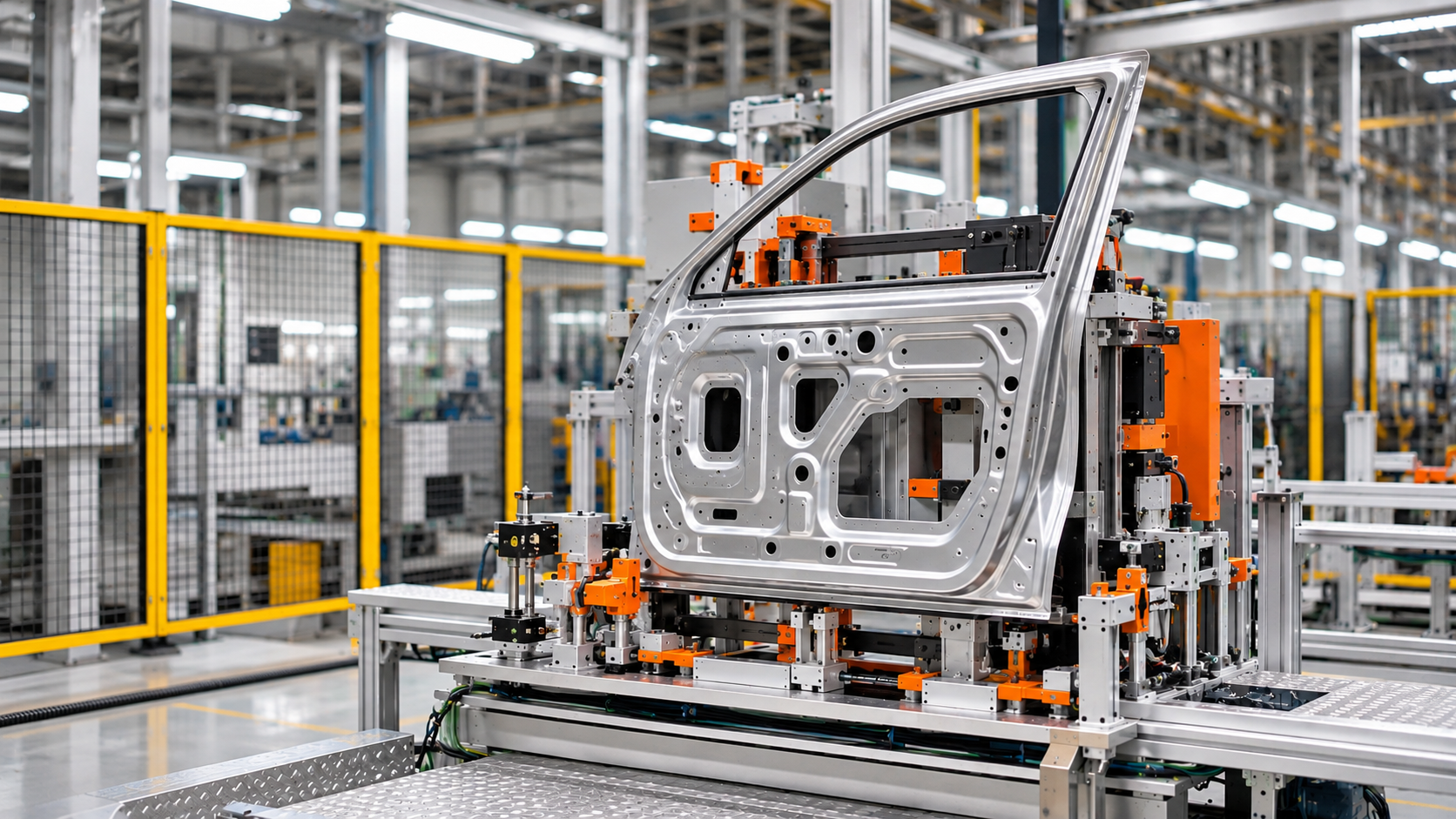
What Is Automotive Closure Assembly Automation?
Automotive closure assembly automation involves the use of specialized equipment, robotic systems, precision tooling, and integrated controls to manufacture vehicle closure components.
These systems are designed to accurately position, join, and assemble inner and outer panels while maintaining the dimensional consistency required in automotive production.
Depending on the application, automated closure assembly processes may incorporate:
Robotic material handling and part positioning
Precision locating and clamping fixtures
Automated hemming and joining processes
Integrated sensors and quality verification
Programmable logic controllers (PLCs) and robotic controls
Custom tooling and production equipment
By integrating these technologies into automated closure assembly systems, automotive suppliers can improve repeatability, reduce manual intervention, and support consistent production quality.
The Importance of Precision in Closure Assembly
Automotive closures are among the most visible and functionally important components of a vehicle.
Even minor variations in assembly can affect panel alignment, exterior appearance, sealing performance, and overall vehicle quality.
Automated assembly systems help manufacturers maintain tighter process control through accurate part positioning, repeatable operations, and consistent application of joining processes.
Precision is especially important when working with lightweight materials, complex panel geometries, and demanding exterior surface requirements.
A properly engineered closure assembly system helps ensure that every component meets the intended manufacturing specifications.
Key Benefits of Automated Closure Assembly Systems
1. Improved Manufacturing Precision
Automated systems use engineered fixtures, robotic positioning, and controlled processes to achieve consistent assembly results.
Reducing process variation helps manufacturers maintain dimensional accuracy and minimize quality issues.
2. Increased Production Efficiency
Automating repetitive assembly operations can reduce cycle times, improve material flow, and support higher production volumes.
Integrated automation also allows multiple manufacturing processes to operate within a coordinated production sequence.
3. Enhanced Product Quality
Consistent positioning, clamping, and joining processes help reduce defects and improve finished component quality.
When combined with appropriate inspection and verification technologies, automated systems can also identify process deviations before they affect downstream operations.
4. Reduced Manual Handling
Robotic handling and automated positioning equipment can reduce the need for operators to repeatedly lift, move, and align large closure panels.
This can improve workplace ergonomics while allowing personnel to focus on equipment monitoring, quality assurance, and production support.
5. Greater Manufacturing Flexibility
Modern automotive manufacturers often require production systems capable of accommodating different vehicle platforms, materials, and component configurations.
Depending on system design, flexible tooling, programmable controls, and robotic automation can support product changes while reducing the need for extensive equipment modifications.
The Role of Hemming in Automotive Closure Assembly
Hemming is a critical manufacturing process used to join the inner and outer panels of many automotive closures.
During hemming, the flange of an outer panel is folded over the edge of an inner panel, creating a secure mechanical connection and a finished exterior edge.
Depending on production requirements, manufacturers may use robotic roller hemming, press hemming, or other specialized hemming technologies.
The selection of a hemming process depends on factors such as component geometry, material characteristics, production volume, and required surface quality.
Integrating hemming equipment into a complete closure assembly system helps manufacturers coordinate part positioning, joining operations, and quality control.
MBE develops automotive hemming systems engineered for precision, repeatability, and demanding production environments.
For a closer look at process selection, explore our article comparing robotic roller hemming vs. traditional hemming.
Custom Automation Solutions for Automotive Manufacturing
No two automotive manufacturing applications are exactly alike.
Differences in component design, production requirements, available floor space, and existing equipment can make standardized solutions impractical.
Custom-engineered automation systems allow manufacturers to address these challenges with equipment designed around their specific production needs.
Successful automation projects require careful consideration of:
Component geometry and material properties
Production cycle-time requirements
Tooling and fixture design
Robotic and controls integration
Equipment accessibility and maintenance
Quality assurance and process verification
Future production flexibility
Taking a comprehensive approach to system design helps manufacturers develop reliable, efficient assembly processes that support long-term production objectives.
Partnering with Modern Body Engineering
As automotive manufacturing continues to advance, the need for dependable, precision-engineered automation solutions remains essential.
Modern Body Engineering (MBE) provides engineering expertise and automation solutions for demanding automotive manufacturing applications.
From specialized hemming technologies to custom assembly equipment and automation integration, MBE focuses on developing solutions that address the technical and production requirements of modern manufacturing.
Whether you're evaluating a new closure assembly process or exploring improvements to an existing production system, selecting the right engineering and automation partner is an important step toward achieving consistent quality and operational efficiency.
Let's Discuss Your Next Automation Project
Looking to improve precision, efficiency, or consistency in your automotive manufacturing operations?
Contact Modern Body Engineering to discuss your closure assembly and automation requirements.